
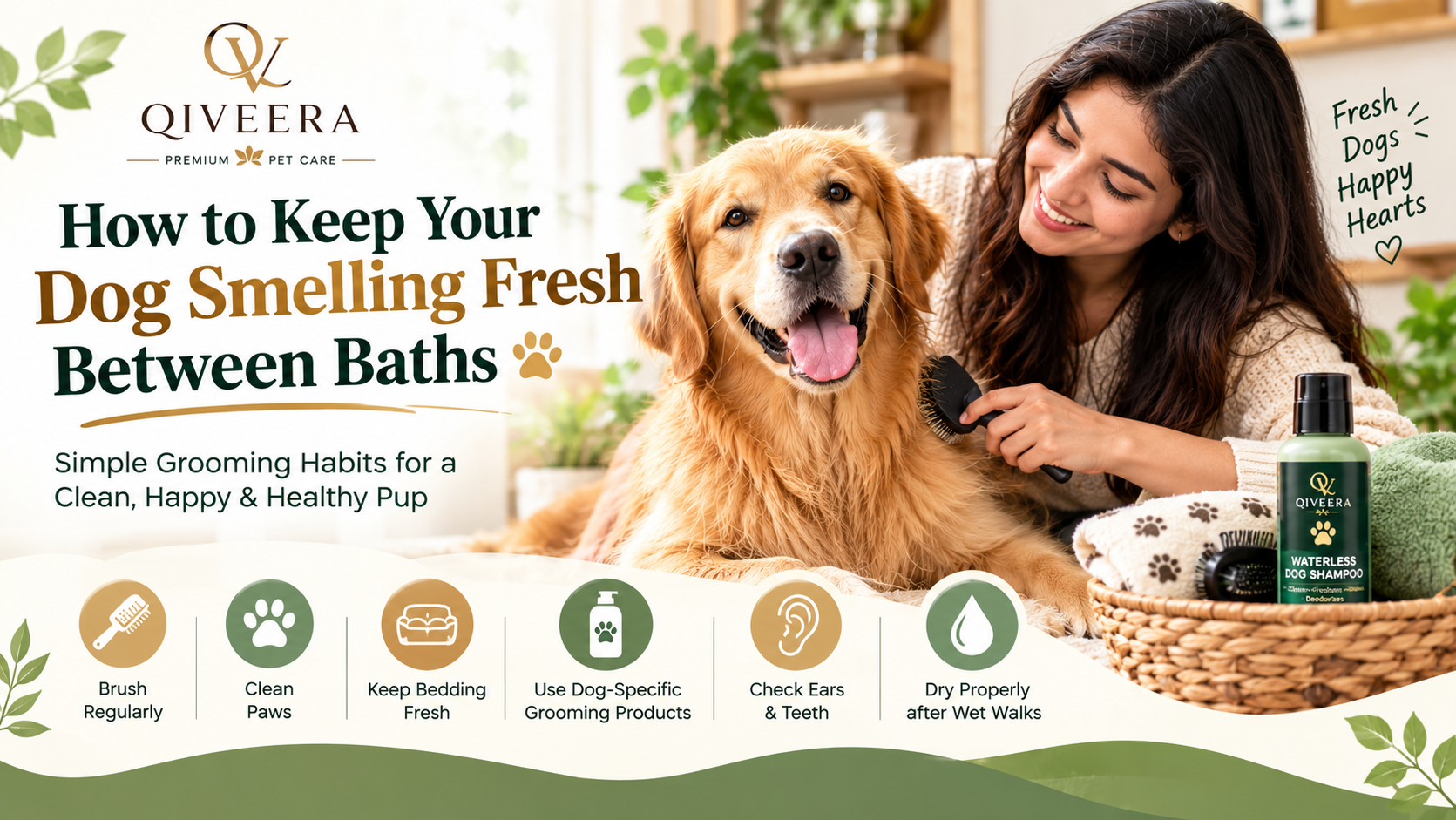
Dogs bring happiness, companionship, and plenty of fun into our lives. However, after outdoor walks, playtime in the garden, or a long day of adventures, your furry friend may not smell as fresh as usual. The good news is that maintaining your dog’s hygiene does not always require a full bath.
With a few simple grooming habits, you can help your dog stay clean, comfortable, and fresh between bathing sessions. From regular brushing to keeping bedding clean, small steps can make a noticeable difference in your pet’s everyday care routine.
Why Does Your Dog Develop an Unpleasant Smell?
A dog’s natural scent is normal, but a strong or unusual odour may indicate that something needs attention. Common reasons include:
- Dirt, mud, and debris trapped in the coat
- Sweat-free but naturally occurring oils and moisture on the skin
- Wet fur after rain or bathing
- Dirty bedding and grooming accessories
- Food particles around the mouth or a dirty collar
- Ear, dental, or skin problems that require veterinary attention
Understanding the source of the smell helps you choose the right cleaning method instead of repeatedly bathing your dog.
1. Brush Your Dog’s Coat Regularly
Brushing is one of the easiest ways to maintain a fresh-smelling coat. It removes loose fur, dust, and surface debris while helping prevent tangles and mats.
Short-haired dogs may benefit from brushing a few times a week, while long-haired or double-coated breeds often need more frequent grooming. Use a brush suitable for your dog’s coat type and be gentle around sensitive areas.
Regular brushing also gives you an opportunity to check for redness, unusual bumps, fleas, ticks, or other changes in your dog’s skin.
2. Clean Your Dog’s Paws After Walks
Your dog’s paws come into contact with soil, grass, puddles, and outdoor surfaces every day. Dirt trapped between the toes can contribute to unpleasant smells.
After walks, gently wipe the paws with a damp, pet-safe cloth or clean them using a product specifically designed for dogs. Check between the toes for debris and dry the paws thoroughly, especially after wet weather.
Avoid using harsh household cleaners or fragranced products that are not intended for pets.
3. Keep Your Dog’s Bedding Clean
Sometimes, the smell you notice on your dog comes from the place where they sleep. Bedding can collect loose fur, dirt, saliva, and moisture over time.
Wash your dog’s blankets and bedding regularly according to the care instructions. Allow everything to dry completely before putting it back in your pet’s sleeping area.
It is also helpful to clean food bowls, water bowls, collars, harnesses, and grooming brushes regularly. A cleaner environment can help your dog stay fresher between baths.
4. Use Dog-Specific Grooming Products
When your dog needs a quick refresh, choose grooming products formulated specifically for canine skin and coats.
Depending on the product instructions, suitable options may include dog grooming wipes, waterless shampoos, or other leave-on grooming products. These can be useful when a full bath is not practical, particularly after a light outdoor adventure.
Pet parents looking for convenient grooming essentials can explore Qiveera Premium Pet Care to discover products that may complement their dog’s regular hygiene routine.
Always follow the product label, avoid contact with your dog’s eyes and mouth, and stop using a product if irritation occurs. Never use human perfume, deodorant, or essential oils on your dog unless a veterinarian has specifically confirmed that the product is safe.
5. Pay Attention to Your Dog’s Ears
A persistent smell around your dog’s head may sometimes come from the ears rather than the coat.
Check your dog’s ears regularly for redness, unusual discharge, swelling, or excessive wax. Clean them only with a suitable veterinary-recommended ear-cleaning product, and avoid inserting cotton swabs deep into the ear canal.
If your dog’s ears smell unusually strong or your pet frequently shakes their head or scratches their ears, consult a veterinarian. These signs can indicate an infection or another condition that requires treatment.
6. Maintain Good Dental Hygiene
Bad breath can affect how fresh your dog smells, even when the coat is clean. Dental plaque and gum disease are common reasons for persistent unpleasant breath.
Introduce tooth brushing with a dog-specific toothbrush and toothpaste. Never use human toothpaste, as some ingredients may be harmful to dogs.
Regular veterinary dental checks can also help identify problems early. If your dog’s breath suddenly becomes unusually unpleasant, seek veterinary advice.
7. Dry Your Dog Properly After Getting Wet
Damp fur can develop a musty smell, especially when moisture remains trapped in a thick coat.
After rain, swimming, or bathing, gently towel-dry your dog. Pay particular attention to the paws, skin folds, and dense areas of fur. If using a dryer, select a pet-safe setting with low heat and keep the airflow comfortable.
Proper drying is particularly important for breeds with thick or long coats, where moisture may take longer to evaporate.
8. Know When an Odour Needs Veterinary Attention
Not every unpleasant smell can be solved with grooming. A strong, persistent, or unusual odour may be associated with skin infections, ear infections, dental disease, or other medical conditions.
Contact your veterinarian if the smell continues despite routine cleaning or is accompanied by itching, redness, greasy skin, sores, hair loss, unusual discharge, or discomfort.
Avoid masking a persistent odour with fragrances. Identifying the underlying cause is the best way to protect your dog’s health.
Build a Simple Freshness Routine for Your Dog
Keeping your dog smelling fresh between baths becomes easier when you follow a consistent routine:
- Brush the coat regularly.
- Wipe dirty paws after outdoor walks.
- Keep bedding and grooming tools clean.
- Use suitable dog-specific grooming products.
- Maintain ear and dental hygiene.
- Dry your dog thoroughly after getting wet.
- Arrange veterinary care for persistent or unusual odours.
These small habits can help maintain everyday cleanliness without bathing your dog more frequently than necessary.