
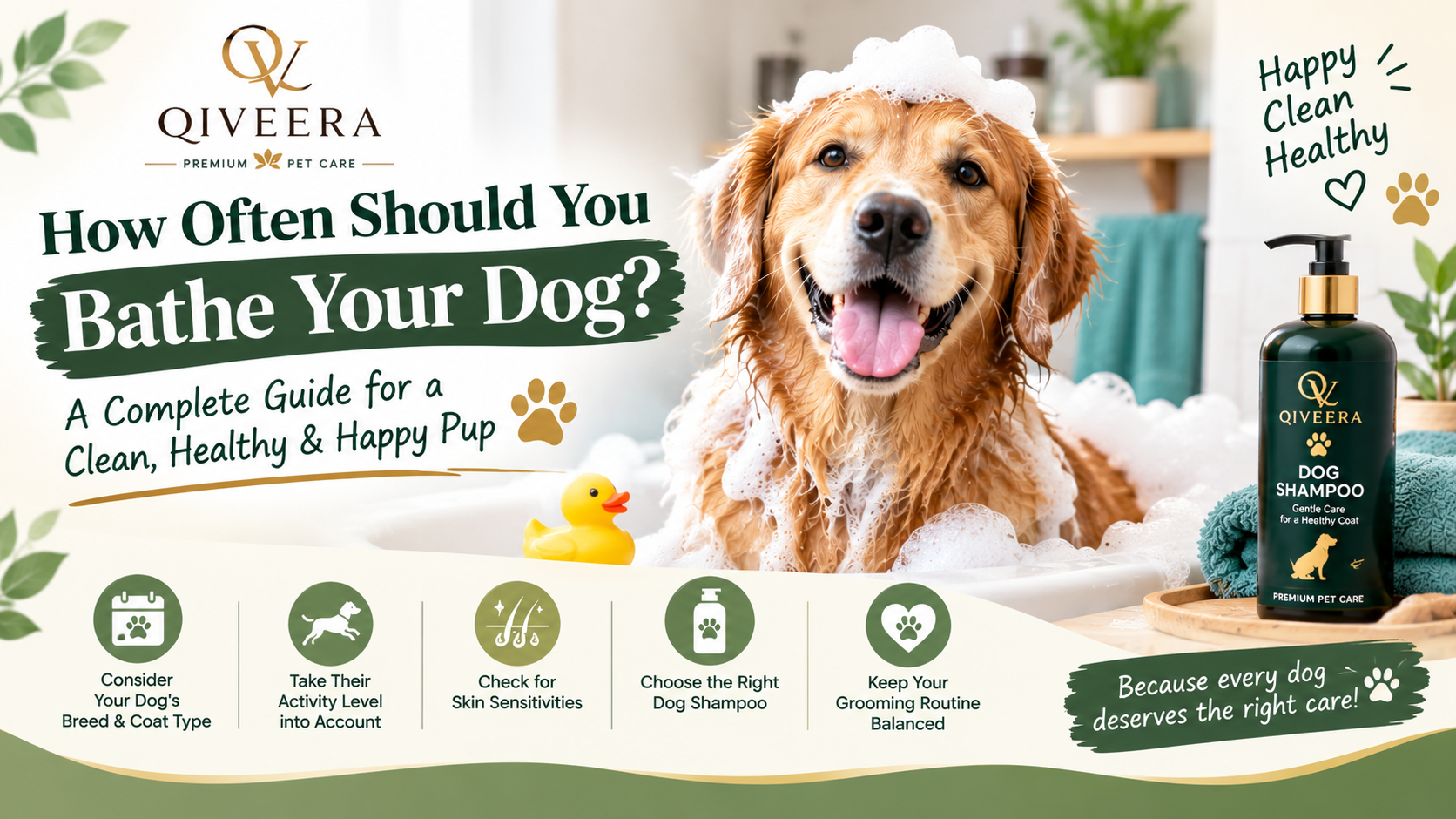
Bathing is an important part of keeping your dog clean, comfortable, and well-groomed. However, one question many pet parents ask is: How often should you bathe your dog? Bath your dog too frequently, and their skin may become dry or irritated. Wait too long, and dirt, odours, and tangles may build up in their coat.
The ideal bathing schedule depends on several factors, including your dog’s breed, coat type, activity level, and skin condition. Understanding these needs can help you create a grooming routine that keeps your furry companion feeling fresh and comfortable.
Why Is Regular Dog Bathing Important?
Regular bathing helps remove dirt, loose debris, and excess oils from your dog’s coat. It can also reduce everyday odours and make brushing easier.
A suitable bathing routine supports general hygiene, especially for dogs that spend time outdoors, play in muddy areas, or enjoy regular walks. However, bathing alone cannot prevent every skin problem. Brushing, balanced nutrition, parasite prevention, and routine veterinary care are also important for maintaining a healthy coat.
How Often Should You Bathe Your Dog?
There is no single bathing schedule that works for every dog. Many healthy dogs do well with a bath every few weeks or when they become dirty, but individual needs can vary considerably.
Here are some general considerations:
1. Short-Haired Dogs
Short-haired dogs often need less coat maintenance because their fur is easier to brush and does not tangle as easily. Occasional bathing may be sufficient if your dog stays relatively clean.
Brush regularly and bathe when necessary, depending on your dog’s activity level and coat condition.
2. Long-Haired Dogs
Long-haired breeds may need more frequent brushing to prevent tangles and mats. Their bathing schedule depends on how quickly the coat collects dirt and how easily it becomes tangled.
Brush thoroughly before bathing and dry the coat carefully afterwards to prevent moisture from remaining trapped in dense fur.
3. Active and Outdoor Dogs
Dogs that regularly visit parks, run through gardens, or play outdoors may get dirty more quickly. They may need baths more often than dogs that spend most of their time indoors.
After outdoor activities, you can often remove light dirt by brushing the coat or wiping muddy paws with a damp cloth instead of giving a full bath every time.
4. Dogs With Sensitive Skin
Dogs that experience dryness, itching, redness, or allergies may require a specific bathing routine. Frequent bathing with an unsuitable product can make irritation worse.
If your dog has ongoing skin concerns, consult a veterinarian about the appropriate shampoo and bathing frequency.
5. Puppies
Puppies may need occasional baths when they get dirty, but their bathing routine should be gentle and appropriate for their age. Use a puppy-safe shampoo, keep them warm, and dry them thoroughly.
Follow the product instructions and ask your veterinarian for guidance if your puppy has skin problems.
How to Choose the Right Dog Shampoo
Choosing a suitable shampoo is just as important as deciding how often to bathe your dog. Dogs have different skin and coat needs, so products formulated specifically for dogs are generally the best starting point.
When choosing a dog shampoo, consider the following:
- Ingredients: Select a formula appropriate for your dog’s skin and coat.
- Skin sensitivity: If your dog has persistent irritation, ask your veterinarian which product to use.
- Coat type: Consider whether your dog has short, long, curly, or thick fur.
- Product instructions: Follow directions for use, dilution, rinsing, and age suitability.
- Special requirements: Medicated or parasite-control shampoos should be selected and used according to appropriate veterinary or product guidance.
Pet parents looking for grooming essentials can explore Qiveera Premium Pet Care for products that complement their dog’s everyday hygiene routine.
Step-by-Step Guide to Bathing Your Dog
Following a simple process can make bath time more comfortable and effective.
Step 1: Brush Before the Bath
Remove loose hair and gently work through tangles before wetting your dog’s coat. Severe mats may need professional attention.
Step 2: Use Lukewarm Water
Wet your dog’s coat with lukewarm water. Avoid spraying water directly into the eyes, nose, and ears.
Step 3: Apply Dog-Specific Shampoo
Use a suitable dog shampoo according to the label instructions. Massage gently through the coat, taking care around sensitive areas.
Step 4: Rinse Thoroughly
Rinse until all shampoo residue has been removed. Leftover product can irritate the skin.
Step 5: Dry Your Dog Carefully
Use a clean towel to absorb excess water. If using a dryer, choose a pet-safe setting and avoid excessive heat. Make sure thick coats are dried properly.
Step 6: Reward Your Dog
Praise your dog and offer a suitable reward to help create a positive association with bathing. A calm approach can make future grooming sessions easier.
Signs You May Be Bathing Your Dog Too Often
Bathing too frequently, especially with harsh or unsuitable products, may affect your dog’s skin.
Watch for signs such as:
- Dry or flaky skin
- Increased scratching
- Redness or irritation
- A coat that feels unusually dry
- Discomfort during grooming
If these symptoms appear, review your bathing routine and shampoo choice. Persistent symptoms should be assessed by a veterinarian.
What If Your Dog Smells Bad Soon After a Bath?
A persistent or strong smell may not mean your dog simply needs another bath. The odour could come from the ears, mouth, skin, paws, or damp fur.
Make sure your dog is dried thoroughly and that bedding, collars, and grooming tools are cleaned regularly. Brush the coat between baths and wipe dirty paws when needed.
If an unpleasant smell continues despite proper grooming, or is accompanied by itching, redness, discharge, or discomfort, consult your veterinarian to identify the cause.
Tips for Maintaining Your Dog’s Hygiene Between Baths
You do not need to give your dog a full bath every time they become slightly dirty. A few simple habits can help maintain cleanliness between bathing sessions:
- Brush your dog’s coat regularly.
- Clean muddy paws after outdoor walks.
- Wash bedding and blankets frequently.
- Keep grooming brushes and collars clean.
- Provide fresh drinking water and balanced nutrition.
- Check the skin and coat for unusual changes.
These habits help support everyday hygiene while allowing you to bathe your dog according to their individual needs.
Why Choose a Consistent Grooming Routine?
Consistency makes it easier to maintain your dog’s coat and recognise changes in their skin. By combining appropriate bathing, regular brushing, and suitable grooming products, you can help your dog stay clean and comfortable.
Qiveera Premium Pet Care offers pet grooming essentials that pet parents can explore when building a regular hygiene routine. Choosing products suited to your dog’s needs and following the correct bathing practices can make grooming simpler.
Conclusion
So, how often should you bathe your dog? The answer depends on your dog’s coat, lifestyle, activity level, and skin health. Many dogs can be bathed every few weeks or whenever necessary, while others may require a different schedule.
Choose a suitable dog shampoo, brush regularly, rinse thoroughly, and dry your pet carefully after each bath. If your dog has persistent skin irritation or unusual odours, seek veterinary advice rather than simply bathing more frequently.
With the right routine and appropriate grooming essentials from brands such as Qiveera Premium Pet Care, you can help your furry companion stay clean, comfortable, and well-groomed throughout the year.