
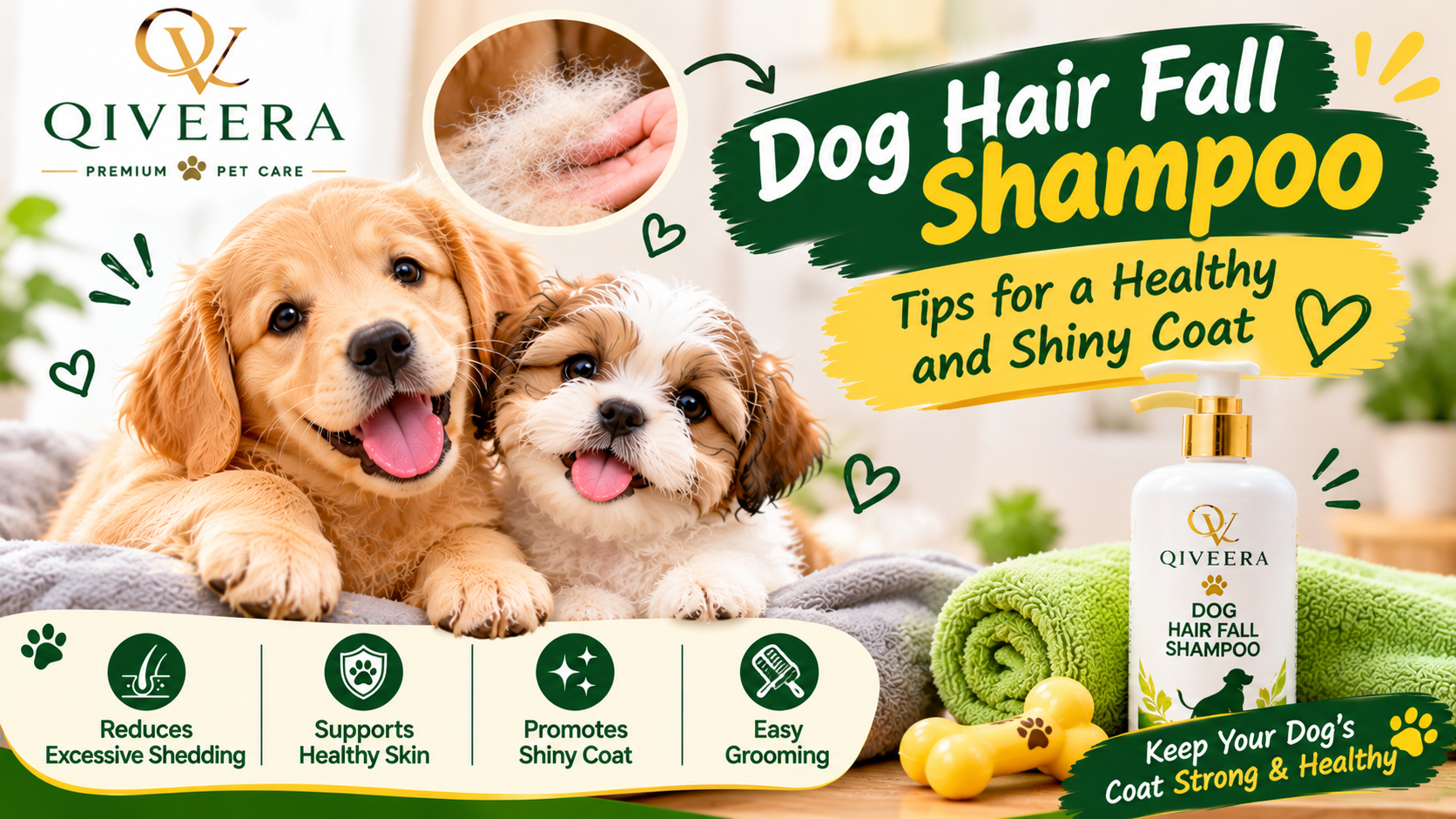
Finding dog hair on your sofa, clothes, and floors is a familiar experience for many pet parents. While some shedding is completely normal, excessive hair fall can sometimes indicate that your dog’s coat or skin needs extra attention.
Choosing a suitable dog hair fall shampoo can be one part of a regular grooming routine. The right shampoo can help clean the coat, remove dirt, and support skin and coat maintenance. However, it is equally important to understand why your dog is losing hair before choosing a grooming product.
In this guide, we will explore common reasons for dog hair fall, how to choose a suitable shampoo, and simple grooming habits that can help maintain a healthy-looking coat.
1. Why Do Dogs Experience Hair Fall?
Shedding is a natural process in which dogs lose old or damaged hair as new hair grows. Some dogs shed throughout the year, while others experience seasonal changes in shedding.
However, excessive hair loss can have several causes, including:
- Seasonal shedding: Changes in weather and daylight can influence normal coat shedding.
- Poor nutrition: An unbalanced diet or nutritional deficiency may affect coat condition.
- Skin allergies: Allergic reactions can cause itching, scratching, and hair loss.
- Fleas and parasites: Parasites may irritate the skin and lead to excessive scratching.
- Skin infections: Certain bacterial or fungal infections can cause hair thinning or bald patches.
- Stress and health conditions: Stress and some underlying medical conditions can affect coat health.
Understanding the cause is important because a regular grooming shampoo cannot resolve every type of hair loss.
2. How Can Dog Hair Fall Shampoo Help?
A suitable dog hair fall shampoo can support your pet’s grooming routine by helping maintain a clean coat and comfortable skin.
Depending on its formulation, a dog shampoo may offer several grooming benefits.
Helps Remove Dirt and Loose Hair
Dogs collect dust, dirt, and loose fur during everyday activities. Bathing with an appropriate dog shampoo helps clean the coat and wash away accumulated debris.
Supports Coat Cleanliness
Regular grooming helps maintain a clean and manageable coat. Choosing a suitable shampoo can make bathing easier and support everyday hygiene.
Helps Maintain Skin Moisture
Some dog shampoos contain moisturising ingredients that help maintain skin hydration. This may be useful for dogs whose skin becomes dry during grooming.
Makes Brushing Easier
A clean, well-maintained coat is generally easier to brush. Regular brushing helps remove loose hair before it spreads around your home and can help prevent tangles.
Important: Shampoo can support coat and skin care, but it does not necessarily stop shedding or treat the medical causes of hair loss.
3. How to Choose the Right Dog Hair Fall Shampoo
Choosing the right shampoo requires understanding your dog’s coat type and skin requirements.
Here are some factors to consider before buying.
Check the Ingredients
Read the product label carefully. Look for clear ingredient information and choose a shampoo specifically formulated for dogs.
Avoid products containing ingredients that have previously irritated your pet’s skin. Natural or herbal ingredients are not automatically safe for every dog.
Consider Skin Sensitivity
If your dog has sensitive skin, choose an appropriate gentle formula. If your pet experiences frequent itching, redness, or irritation, consult a veterinarian before trying a new shampoo.
Understand Your Dog’s Coat Type
Different coat types require different grooming approaches. Long-haired dogs may need more frequent brushing, while short-haired dogs may require less intensive coat maintenance.
Choose grooming products that match your dog’s coat and follow the manufacturer’s directions.
Avoid Human Shampoo
Human shampoo is not recommended for dogs because canine skin has different characteristics from human skin. Using unsuitable products may cause dryness or irritation.
Always select dog-specific grooming products.
4. Groom Your Dog Regularly to Manage Loose Hair
Shampoo is only one part of maintaining your dog’s coat. Regular brushing is equally important.
Brushing helps remove loose fur, prevent tangles, and distribute natural oils throughout the coat.
Consider these brushing tips:
- Brush your dog according to its coat type.
- Use a suitable brush or comb.
- Brush gently to avoid irritating the skin.
- Pay attention to areas where tangles commonly develop.
- Make grooming a comfortable and positive experience.
Dogs with long or thick coats may require more frequent brushing than short-coated breeds.
5. Give Your Dog Proper Nutrition
A balanced diet plays an important role in maintaining healthy skin and coat condition.
Choose complete and balanced dog food appropriate for your pet’s age, size, and activity level. Make sure your dog has access to fresh drinking water throughout the day.
Nutrients such as protein and essential fatty acids contribute to normal skin and coat health.
Avoid introducing supplements without professional advice. If your dog’s coat becomes dull or hair loss increases unexpectedly, consult your veterinarian to check for possible nutritional or medical concerns.
6. Bathe Your Dog the Right Way
Bathing too frequently or using unsuitable products can irritate your dog’s skin. Create a bathing routine based on your pet’s coat, lifestyle, and individual needs.
Follow these simple steps:
- Brush your dog’s coat before bathing to remove loose hair and tangles.
- Wet the coat using lukewarm water.
- Apply a suitable dog shampoo according to the product instructions.
- Gently massage the shampoo through the coat.
- Rinse thoroughly to remove all product residue.
- Dry your dog carefully with a clean towel.
- Brush the coat once it is ready for grooming.
Avoid getting shampoo into your dog’s eyes, nose, or ears. If irritation occurs, stop using the product and seek veterinary advice.
7. When Should You Consult a Veterinarian?
Not all hair fall is normal. Sometimes, excessive shedding is a sign of an underlying health problem.
Contact your veterinarian if you notice:
- Sudden or unexplained hair loss.
- Bald patches on the body.
- Persistent scratching or licking.
- Redness, scabs, or flaky skin.
- Unusual skin odour.
- Changes in appetite or energy levels.
A veterinarian can identify possible causes such as allergies, parasites, infections, or hormonal conditions and recommend appropriate treatment.
Do not rely on a grooming shampoo alone when your dog has unexplained or persistent hair loss.
8. Explore Dog Grooming Products at Qiveera Premium Pet Care
Maintaining your dog’s coat requires consistent grooming and suitable products. Qiveera Premium Pet Care is a brand pet parents can explore when looking for dog grooming and hygiene essentials.
If you are searching for dog hair fall shampoo, consider your pet’s coat type, skin sensitivity, and grooming requirements before selecting a product.
Explore the Qiveera Premium Pet Care range and choose grooming essentials that fit your dog’s needs. Always read product descriptions and follow the recommended usage instructions.
A thoughtful grooming routine, combined with proper nutrition and veterinary care when needed, can help support your dog’s overall coat health.
Final Thoughts
Dog hair fall can be part of a normal shedding cycle, but excessive or unusual hair loss deserves attention.
Choosing a suitable dog hair fall shampoo, brushing regularly, providing balanced nutrition, and maintaining proper bathing habits can support everyday coat care.
Remember that shampoo is not a cure for every hair-loss problem. If you notice bald patches, persistent itching, or sudden changes in your dog’s coat, consult a veterinarian.
With consistent care and suitable grooming products from brands such as Qiveera Premium Pet Care, you can make coat maintenance a more comfortable part of your dog’s daily routine.