
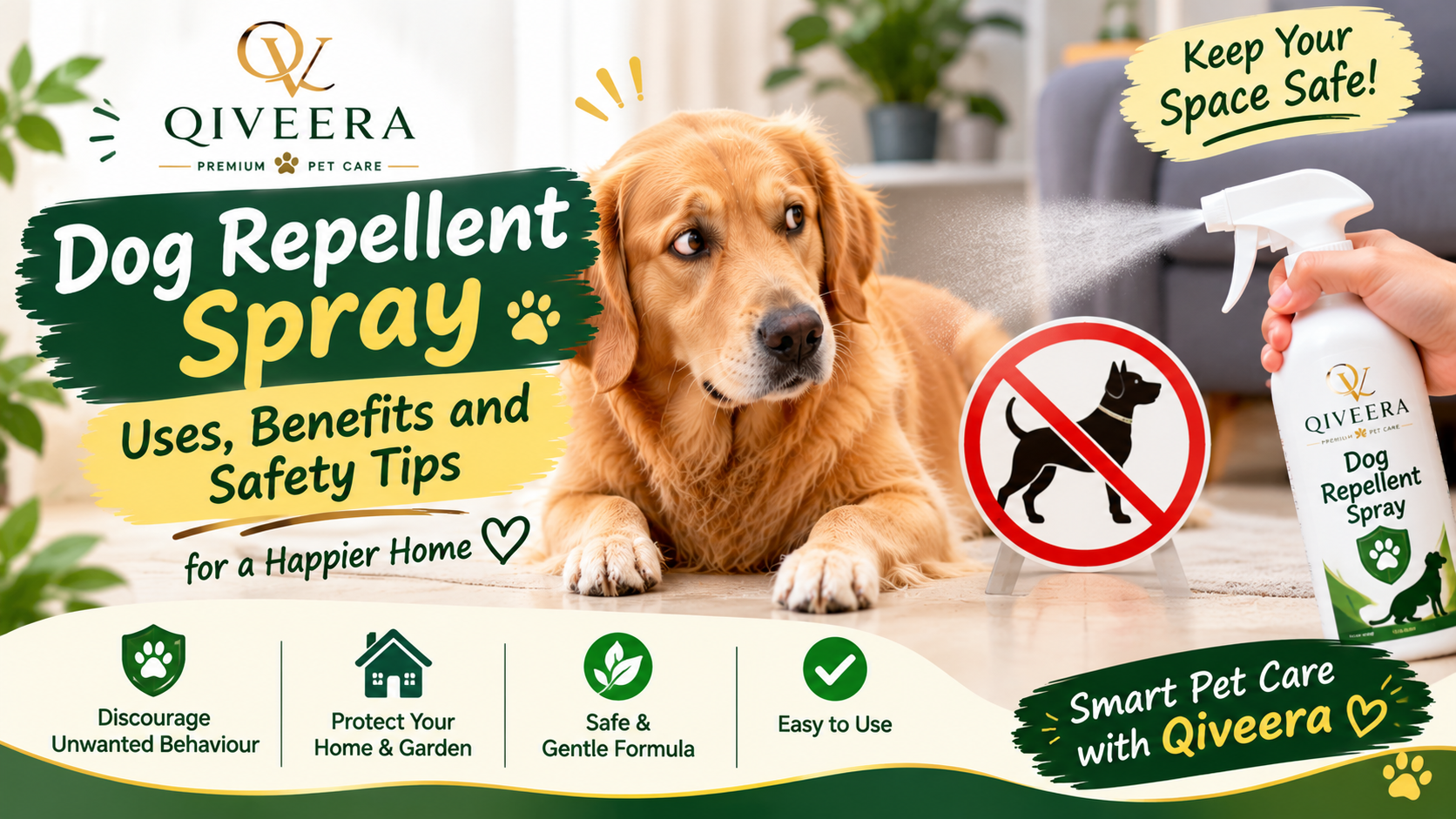
Dogs are curious animals who love exploring their surroundings. Sometimes, however, their behaviour can create challenges for pet parents. Chewing furniture, entering restricted areas, or repeatedly approaching certain objects can make it difficult to maintain a clean and organised home.
This is where dog repellent spray may be considered as one part of a responsible pet-management approach. When selected and used correctly, an appropriate deterrent may help discourage unwanted behaviour in certain situations. However, understanding the purpose, application, and safety precautions is essential before using any spray around pets.
In this guide, we will explore what dog repellent spray is, how it may be used, and what pet parents should consider when choosing one.
1. What Is Dog Repellent Spray?
Dog repellent spray is a product designed to discourage dogs from approaching or interacting with particular areas or objects. Depending on its formulation, it may use a scent or taste that dogs find unpleasant.
Different sprays are made for different purposes. Some are designed for use on suitable household surfaces to discourage chewing, while others are intended for specific outdoor deterrent applications.
It is important to understand the intended use before purchasing a product. A surface deterrent is not necessarily suitable for direct application to a dog’s body, and an animal-attack deterrent is not the same as a household training product.
2. Why Do Pet Parents Consider Dog Repellent Spray?
Pet parents may consider a suitable deterrent when trying to manage certain unwanted behaviours around the home.
Some common situations include:
- Furniture chewing: A suitable surface deterrent may help discourage a dog from chewing particular objects.
- Restricted areas: Some products are designed to discourage pets from approaching specific spaces.
- Garden protection: Certain outdoor products may be intended to discourage animals from entering designated areas.
- Household boundaries: A deterrent may be used alongside training to help establish which objects or spaces are off-limits.
However, spraying alone does not teach a dog what behaviour is expected. Positive reinforcement, supervision, and providing suitable alternatives remain important.
3. How to Choose the Right Dog Repellent Spray
Not every spray is appropriate for every situation. Before choosing a product, consider the following factors.
Check the Intended Purpose
Read the product label carefully. Determine whether the spray is intended for furniture, outdoor areas, training support, or personal protection during an animal encounter.
Never assume that all products marketed as dog repellent sprays can be used in the same way.
Review the Ingredients
Check the listed ingredients and safety warnings. Avoid products with unclear formulations or ingredients that may irritate or harm pets.
Natural ingredients are not automatically safe. Certain essential oils and concentrated substances can be harmful to animals, so seek veterinary advice if you are unsure.
Follow Application Instructions
Use the spray only on surfaces or areas specified by the manufacturer. Keep it away from your dog’s eyes, nose, mouth, food, and water bowls unless the product label specifically provides appropriate directions.
Allow treated surfaces to dry as instructed before allowing your pet near them.
Consider Your Dog’s Individual Needs
Age, health, skin sensitivity, and behaviour can influence whether a particular product is suitable. If your dog has allergies, respiratory sensitivity, or an existing health condition, consult a veterinarian before introducing a new spray.
4. Use Dog Repellent Spray Alongside Positive Training
A deterrent should not replace proper training. Dogs learn more effectively when pet parents consistently reward desirable behaviour.
For example, if your dog chews furniture, provide appropriate chew toys and reward your pet for using them. If your dog repeatedly enters a restricted room, use suitable barriers and teach a consistent boundary.
Avoid shouting, frightening, or physically punishing your dog. These approaches can increase stress and may make unwanted behaviour more difficult to manage.
Remember that chewing, digging, and exploring are natural canine behaviours. The goal is to redirect them towards suitable activities rather than simply suppressing them.
5. Important Safety Precautions
Safety should always come first when using any animal deterrent.
Keep these precautions in mind:
- Read the full product label before use.
- Never use a surface deterrent directly on your dog’s body.
- Avoid spraying near your pet’s face, eyes, nose, or mouth.
- Keep sprays away from children, food, and water bowls.
- Store products securely and follow the recommended storage conditions.
- Stop using the product if your pet develops irritation or unusual behaviour.
- Contact a veterinarian if you suspect accidental exposure or an adverse reaction.
Some sprays are intended for emergency personal protection against an attacking animal. These are different from everyday household deterrents and should only be used according to their specific instructions.
6. Explore Responsible Pet Care With Qiveera Premium Pet Care
Choosing suitable products is an important part of maintaining your pet’s hygiene and everyday comfort. Qiveera Premium Pet Care is a brand pet parents can explore when looking for grooming and hygiene essentials for their furry companions.
From maintaining a regular grooming routine to choosing suitable dog-care products, making informed decisions can help support your pet’s overall well-being.
When considering dog repellent spray or any other specialised product, always check its intended purpose and safety information. Select products that match your requirements and consult a veterinarian whenever you have concerns about your dog’s health or behaviour.
7. Alternatives to Consider Before Using a Deterrent
Sometimes, simple changes around the home can help manage unwanted behaviour without requiring a spray.
Consider these practical alternatives:
- Use baby gates or barriers to restrict access to certain areas.
- Provide safe chew toys and interactive activities.
- Keep rubbish bins and potentially harmful household items secured.
- Reward your dog for following household boundaries.
- Clean marked areas thoroughly with an appropriate pet-safe cleaner.
- Seek help from a qualified trainer if unwanted behaviour continues.
These steps address some of the reasons behind unwanted behaviour and can work alongside an appropriate deterrent when necessary.
Final Thoughts
Dog repellent spray may be useful in certain situations, but choosing the right type and using it responsibly are essential. Always understand the product’s purpose, follow the manufacturer’s instructions, and prioritise your dog’s comfort and safety.
For a happier and healthier pet, combine appropriate products with positive training, regular grooming, a safe environment, and proper veterinary care.
With thoughtful choices and consistent attention, pet parents can create a comfortable home while helping their dogs develop good everyday habits.v
Qiveera Premium Pet Care encourages responsible pet care through informed product choices and consistent grooming and hygiene practices.